
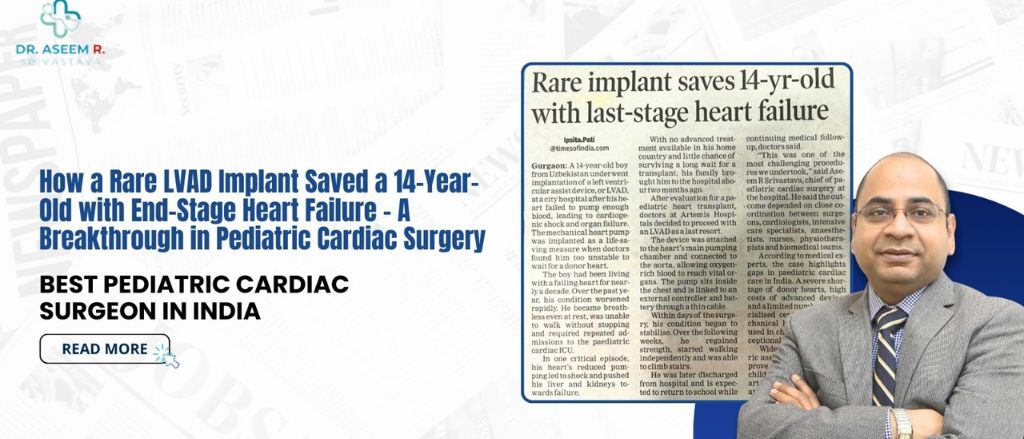


A 14-year-old boy from Uzbekistan, suffering from end-stage heart failure, received a new lease on life after undergoing a rare and highly complex LVAD implantation surgery at Artemis Hospital, Gurugram. The life-saving procedure was successfully performed under the leadership of Dr. Aseem Ranjan Srivastava, one of the Best Pediatric Heart Surgeons in India.
The young patient had been battling Dilated Cardiomyopathy, a condition where the heart becomes enlarged and too weak to pump blood effectively, for nearly a decade. Over the years, his condition progressively worsened, eventually leading to repeated ICU admissions and severe complications affecting multiple organs.
In the months before surgery, the boy began experiencing severe breathlessness even while resting. Walking a few steps became difficult, and frequent hospitalizations became unavoidable. During one critical episode, his weakened heart could no longer pump enough blood to vital organs, resulting in cardiogenic shock and early liver and kidney failure.
With limited advanced pediatric cardiac treatment options available in his home country and no immediate donor heart available for transplantation, the family brought him to India in search of hope.
After extensive evaluation by the pediatric cardiac team at Artemis Hospital, doctors decided to implant a Left Ventricular Assist Device (LVAD) as an emergency life-saving measure.
An LVAD is a mechanical heart pump that helps circulate oxygen-rich blood from the heart to the rest of the body when the heart is unable to function properly. The device was surgically attached to the heart’s main pumping chamber and connected to the aorta to restore blood flow and support organ function.
Due to the patient’s age, fragile condition, and advanced stage of heart failure, the surgery was considered extremely challenging and rare in pediatric patients.
Within days of the procedure, the boy’s condition started improving significantly. His organ functions stabilized, breathing improved, and he gradually regained strength. Over the following weeks, he was able to walk independently, climb stairs, and resume normal daily activities. Doctors have now confirmed that he is fit to return home and continue his recovery while attending school and undergoing regular follow-up care.